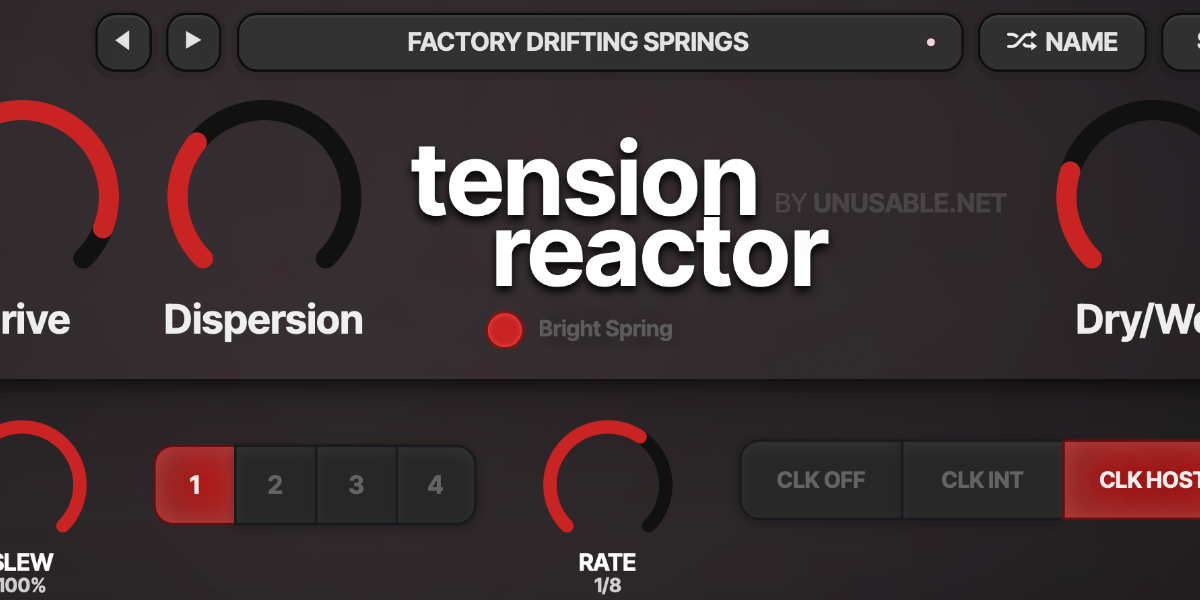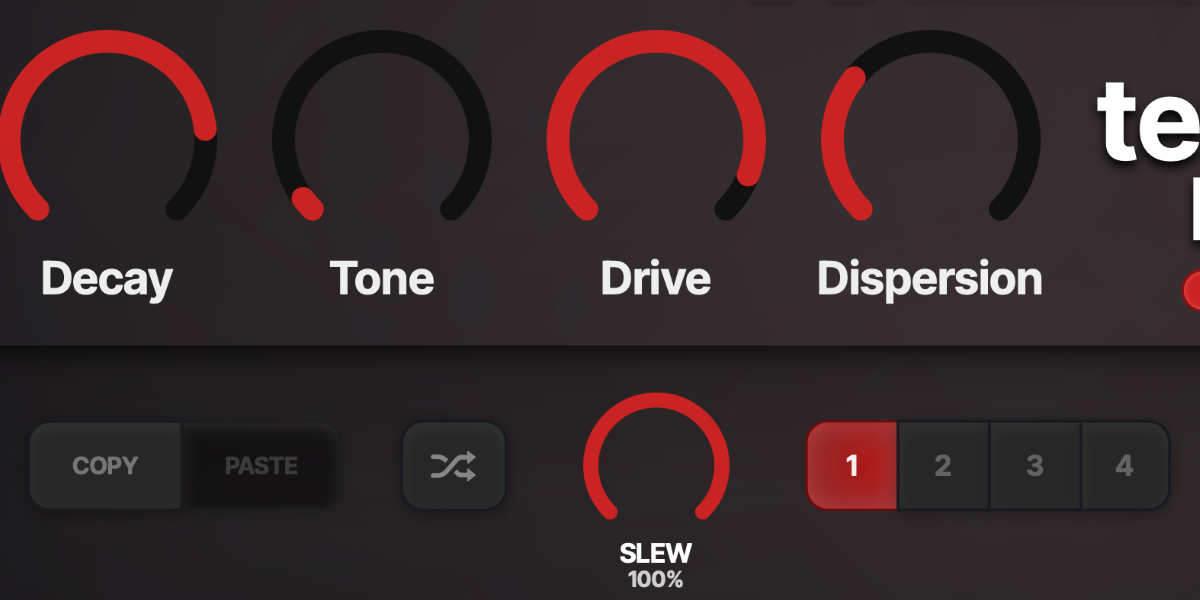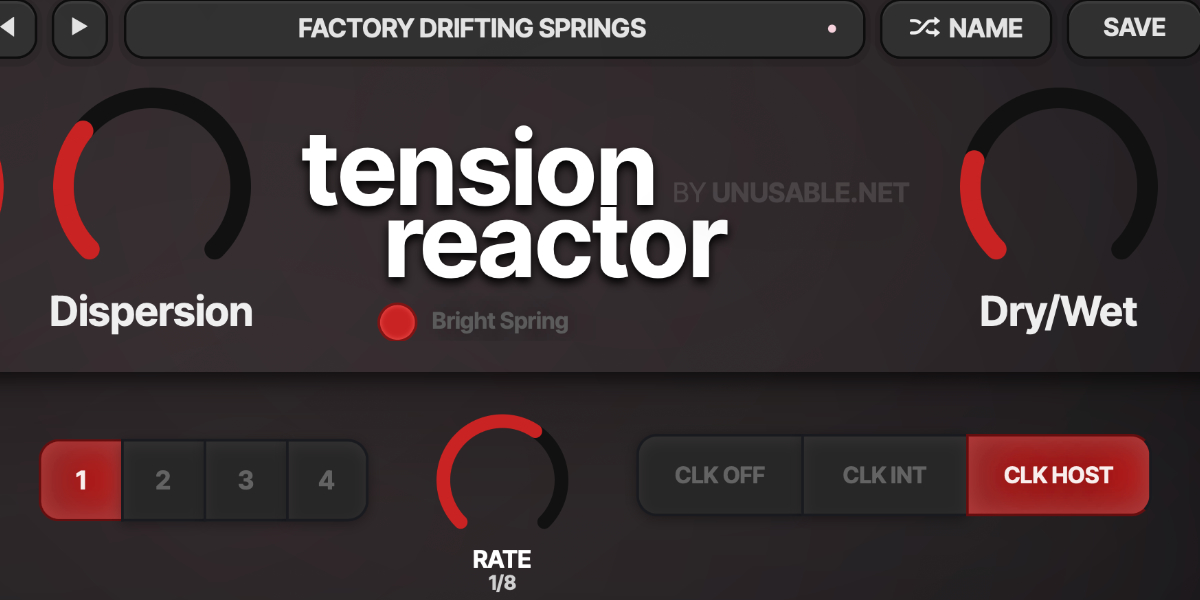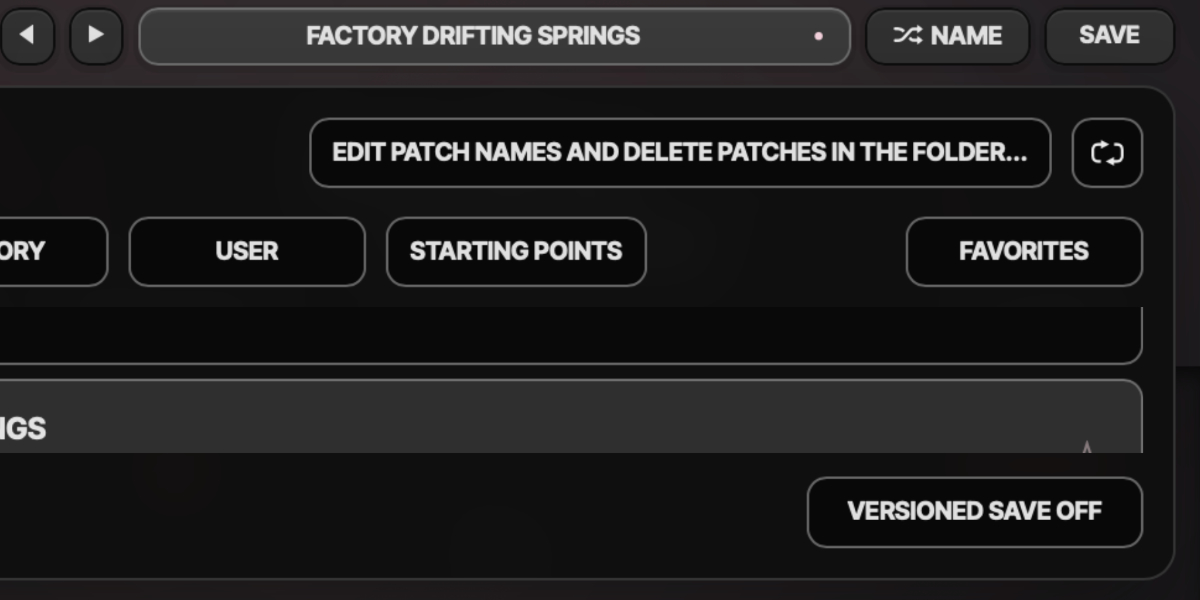
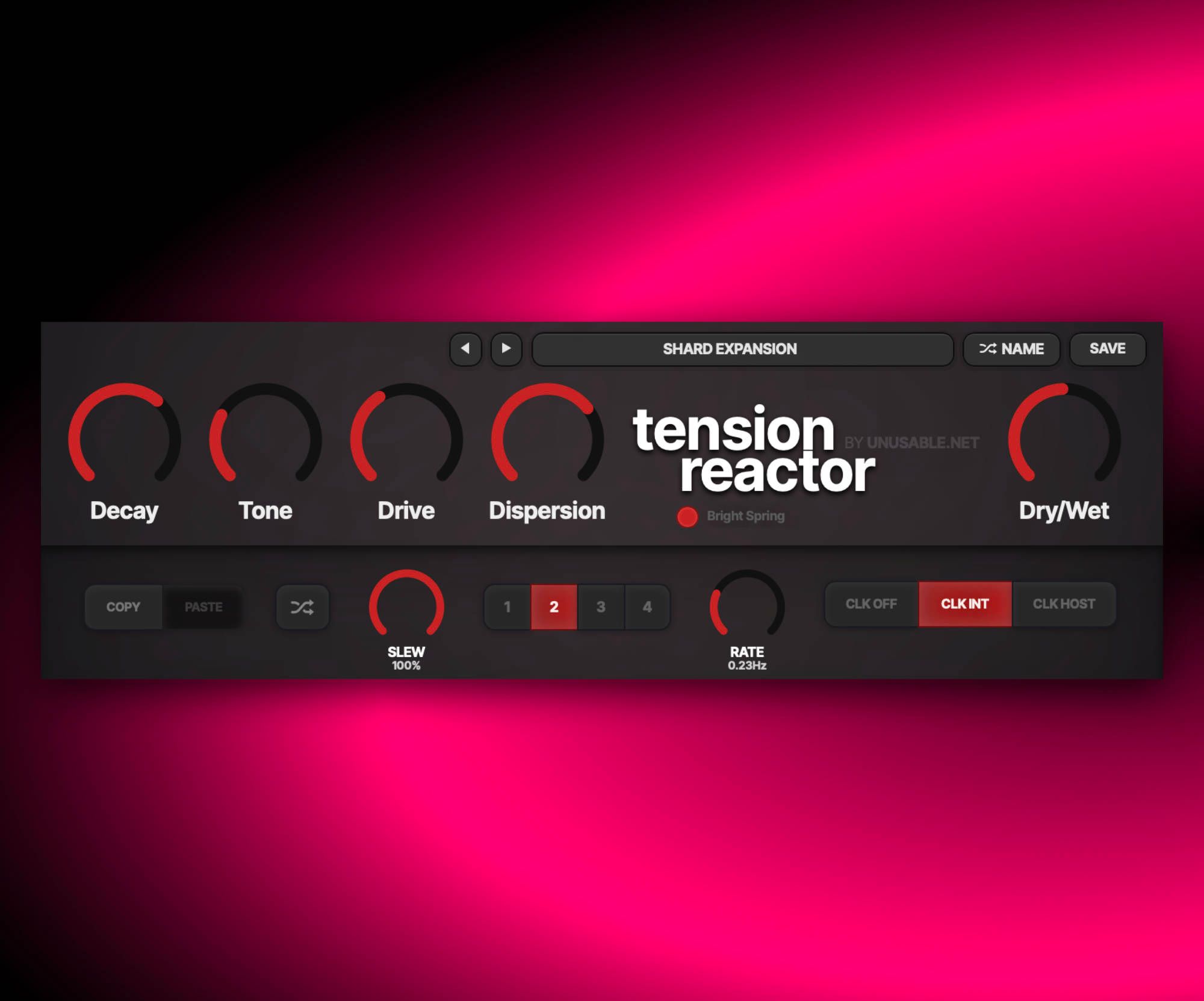
Spring signal path and main controls
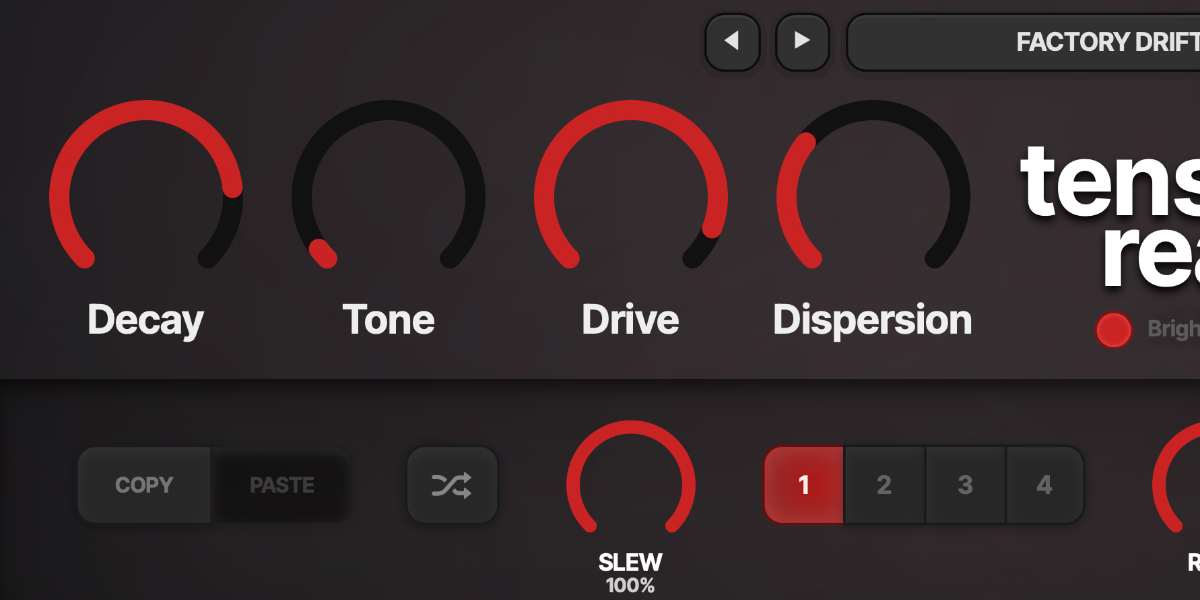
The input is band-limited and driven through separate send, transformer, spring-tank, recovery, and output stages. The spring drive is mono, while intentionally mismatched spring paths rebuild the processed signal in stereo.
Decay sets how long energy remains in the spring model. Higher settings increase sustain and make interactions between new transients and the existing tail more obvious.
Tone changes the spectral balance of the tank and recovery path. Lower settings darken the spring response; higher settings retain more upper-frequency detail.
Drive increases excitation and nonlinearity in the spring-driving circuit. It affects how strongly the input hits the tank rather than acting as one generic distortion stage after the reverb.
Dispersion changes the relationship between the spring modes. Moving it can create pitch-like bends, chirps, smearing, and changes in the apparent mechanical tension.
Dry/Wet crossfades between the original input and the complete spring-reverb output.
Fresh transients interact with motion already in the tank, so identical hits can produce slightly different reinforcement, cancellation, and decay behavior.